School history
A new school for a growing town
Why Ashland planned another school—and the difference between building it in 1911 and opening it in 1912.
A school before this school.
The brick building was not the beginning of education on this site. Betty Plank’s local history dates an earlier wooden Pleasant Street school to 1871. Her account describes primary and intermediate rooms, with children sometimes sharing seats when enrollment outgrew the space.
An eight-room idea.
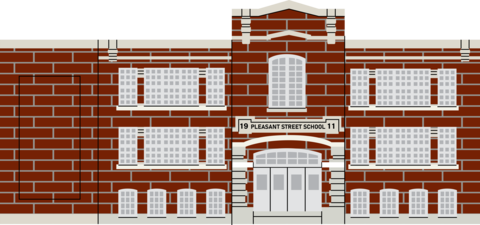
On October 19, 1910, the Ashland Press presented a proposed eight-room school for Pleasant Street. Architect Vernon Redding described this design as Craftsman in style and emphasized daylight, ventilation and room to grow. His perspective drawing was a proposal, not a photograph of a completed building.
The paper promoted a special bond election for the next day. Its $50,000 proposal covered two schools and other obligations; it cannot be used as Pleasant Street’s individual construction bill. The newspaper’s arguments reveal what worried a growing town: crowded classrooms, temporary accommodation and the need to plan ahead.
Built in one year. Opened in the next.
The original 1915 centennial history gives two useful milestones: contracts for Pleasant Street and Lincoln schools were awarded on February 28, 1911, and Pleasant Street was occupied in January 1912. That is why “built in 1911” and “opened in 1912” can both be right. January is an occupancy date in that source, not a verified dedication ceremony.
Read the photograph with its correction.
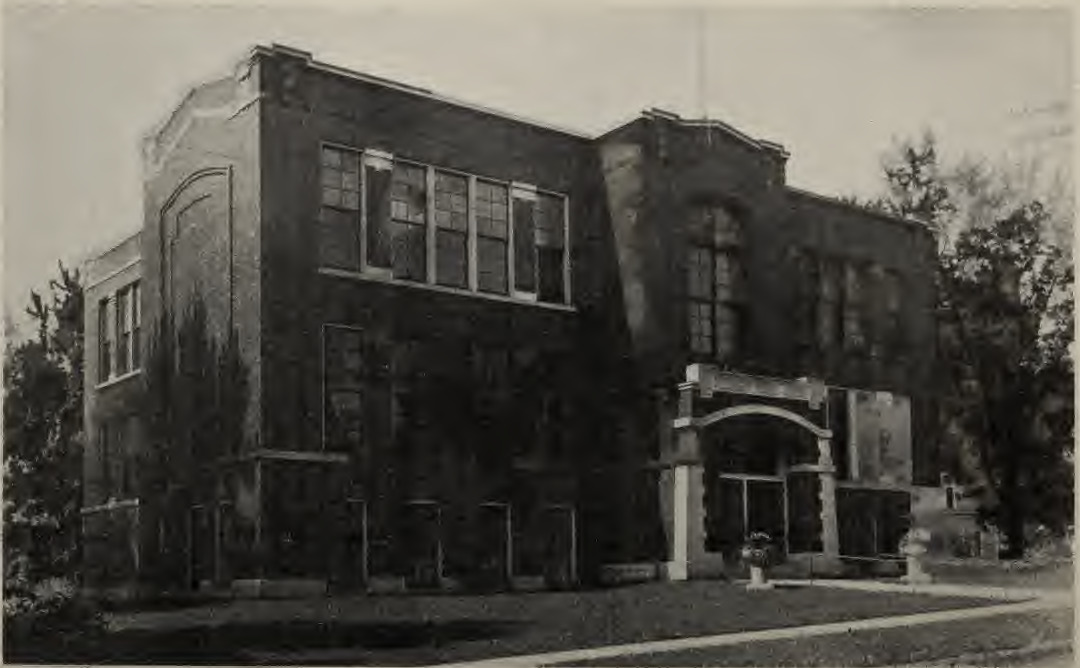
The photograph shown here was published in the 1915 book. Its original caption mistakenly names Arthur Street. The book’s own explanation on printed page 179 corrects page 86 to Pleasant Street and page 88 to Arthur Street. The publication date is known; the date the camera captured the scene is not.
Questions worth carrying forward.
Which proposed design details were built, and which changed? What could original contracts or school-board records add? A proposal describes intentions. A photograph records a view. Neither, by itself, answers every question about construction.
Follow the evidence
Sources & further reading
- Will Duff, Ashland’s 1915 centennial history, p. 58
Contracts awarded February 28, 1911; Pleasant Street occupied January 1912. Original page visually verified.
- Will Duff, photograph p. 86 and correction p. 179
The correction is at PDF page 183; no photograph date is asserted.
- Ashland Press, October 19, 1910, p. 1
Corrected archival scan supplied by Ashland Public Library. Original factual summary; no article scan reproduced.
- Betty Plank, Historic Ashland County II, pp. 163–165
Bibliographic attribution to the excerpt supplied by Ashland Public Library; no modern book images reproduced.